President Donald Trump is navigating a volatile 2026 global landscape, balancing high-stakes trilateral peace talks in Geneva for the Ukraine conflict against a massive military buildup in the Middle East. With a self-imposed 10-day deadline for a nuclear deal with Tehran, the administration is oscillating between "Realignment through Peace" and the threat of "bad things" for regional adversaries.
The world in February 2026 feels like a chessboard where the grandmaster has decided to flip the table and redraw the squares. President Donald Trump’s second term has moved past the rhetoric of the campaign trail and into the cold, hard reality of "America First" in action. It is a doctrine that defies traditional categorization: one day, the White House is brokering peace deals between African nations; the next, it is using Tomahawk missiles to stabilize the Western Hemisphere.
As we hit the mid-point of February, the administration is trapped in a paradox of its own making. In Geneva, trilateral talks between the U.S., Russia, and Ukraine have reached a grueling stalemate. Simultaneously, the USS Gerald R. Ford is steaming toward the Middle East, a steel-clad reminder that while Trump prefers the "Board of Peace," he is never afraid to reach for the sword. This isn't just a choice between diplomacy or war; it is the weaponization of unpredictability.
The Geneva Squeeze: Ukraine’s "Unfair" War
For nearly four years, the war in Ukraine has bled Europe white. In March 2025, Trump made good on his promise to "stop the bill," suspending billions in military aid to Kyiv to force a seat at the negotiating table. The result? A series of "difficult" discussions in Geneva that ended this week without a breakthrough.
White House spokesperson Karoline Leavitt’s recent briefing was a masterclass in the new American realism. She described the conflict as "very unfair"—not just to the dead, but to the American taxpayer. This transactional view of alliance is the new baseline. Trump isn’t seeking a "just peace" in the 20th-century sense; he is seeking an exit strategy that stops the hemorrhaging of U.S. capital.
The pressure is now squarely on President Volodymyr Zelenskyy. Moscow’s demands for sweeping territorial concessions remain unchanged, and with U.S. military aid effectively blocked, Kyiv’s leverage is evaporating. The "Trump Doctrine" here is simple: if you want American support, you must find a way to make the war end, even if that end is a bitter pill to swallow.
The 10-Day Iranian Countdown
While Geneva is about de-escalation, the Middle East is simmering toward a boil.
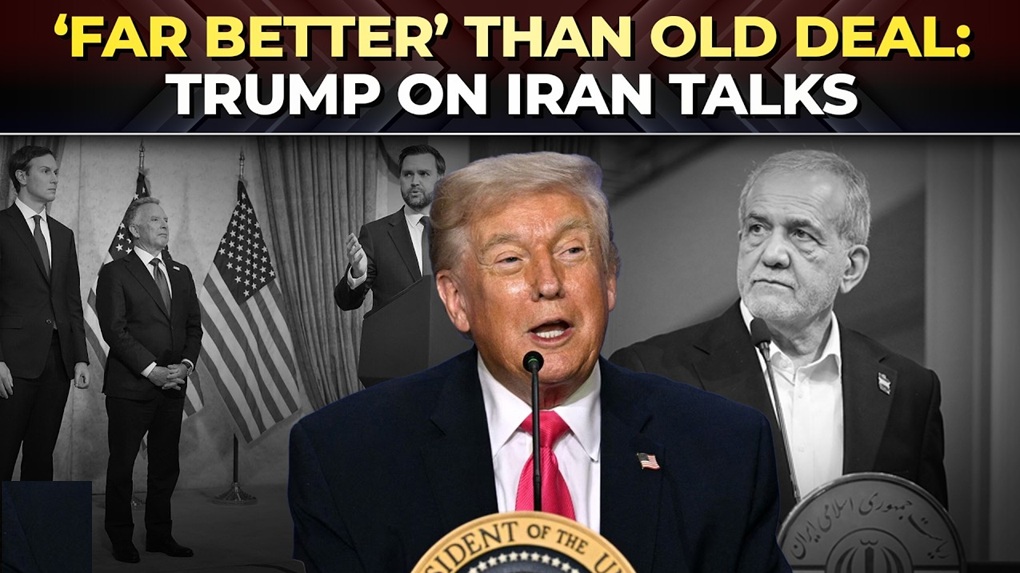
 Trump has given himself a roughly 10-day window to decide the fate of a new nuclear deal with Iran. Special Envoy Steve Witkoff and Jared Kushner have been engaged in back-channel diplomacy to prevent a repeat of the "Twelve Day War" of June 2025.
However, the diplomacy is backed by the largest concentration of U.S. air power in the region since 2003. The threat of a strike on Iran’s nuclear facilities at Fordow is no longer a "what if"—it is a planned contingency. For Trump, the "Deal of the Century" isn't just for Israel and Palestine; it’s a regional realignment that demands Tehran’s total capitulation or its total neutralization.
The "Donroe Doctrine" and the Death of Soft Power
Having covered the State Department through three administrations, the current atmosphere in Washington is unrecognizable. Traditional diplomacy—built on slow-moving consensus and shared values—has been replaced by what insiders are calling the "Donroe Doctrine." It’s an expansion of the Monroe Doctrine, but with a predatory, corporate edge.
I witnessed this first-hand during the January operation in Venezuela. This wasn't a standard regime-change mission; it was a resource acquisition. By capturing Nicolás Maduro and claiming control over Venezuelan oil, the administration signaled that "might makes right" is now official U.S. policy.
What the data won't tell you is how much this is alienating long-term allies. In the halls of the Munich Security Conference this month, the fear wasn't about Russia; it was about American volatility. When Trump threatens to "incorporate" Greenland or renames the Gulf of Mexico the "Gulf of America," he isn't just posturing for his base. He is signaling to China and Russia that the Western Hemisphere is a closed shop—and that the U.S. is the landlord. We are trading "soft power" for "naked leverage," and the long-term cost of that trade is yet to be tallied on a balance sheet.
The New National Defense Strategy: "No More Distractions"
The 2026 National Defense Strategy (NDS) represents a radical departure from the post-Cold War era. It explicitly states that the Department will no longer be "distracted by interventionism." Yet, the military has never been more active. How do we reconcile this?
The strategy is "Selective Dominance." The U.S. is withdrawing from conventional deterrence in Europe, asking NATO allies to take over the majority of capabilities by 2027. This isn't isolationism; it's a redeployment of resources. The goal is to concentrate American power in the Western Hemisphere and the Arctic, where sea lanes are opening up.
- NATO Burden Sharing: Allies are being pushed toward a 5% GDP defense spending target.
- The Board of Peace: A new $5 billion Gaza reconstruction fund, notably excluding Palestinian representation, aimed at creating a "Special Economic Zone."
- Tariff Warfare: Economic policy is now officially National Security policy. Sections 232 and 301 are used as preemptive strikes against trade competitors like the EU and China.
Key Takeaways for the 2026 Geopolitical Landscape
- The Ukraine Pivot: Expect a "ceasefire of exhaustion" by summer 2026, likely brokered in Ankara, as U.S. aid remains frozen.
- Iranian Brinkmanship: Trump will likely choose a "limited" strike over a prolonged war if a nuclear deal isn't reached within the 10-day window.
- The Donroe Doctrine: Central and South American sovereignty will continue to be challenged by U.S. resource-driven interventions.
- Institutional Exit: The U.S. withdrawal from 66 international organizations marks the effective end of the liberal world order as we knew it.
The Business of Peace
For the second Trump administration, peace is a business deal. The inaugural meeting of the "Board of Peace" in Washington this month saw delegations from 45 countries, but the conversation was about contracts, not human rights. The $5,000-person military base planned for Gaza is being framed not as an occupation, but as a security prerequisite for real estate development.
This "Peace-Business Nexus" is the ultimate evolution of the Trump Doctrine. It argues that wars end not because of moral consensus, but because they become too expensive to continue and more profitable to resolve. In this world, diplomacy is simply the negotiation of terms before the next tariff or Tomahawk is launched.
Historical Context: The Erosion of Norms
To understand the 2026 landscape, one must look at the expiration of the New START treaty and the dismantling of the post-1945 rules-based order. By favoring hard power over multilateralism, the U.S. has created a vacuum. While Trump claims to have resolved eight global conflicts in a year, the "peace" achieved—such as between Armenia and Azerbaijan—often feels more like a temporary freeze than a durable settlement.
As we look toward the July NATO summit in Ankara, the question isn't whether Trump will choose diplomacy or war. He has already chosen both. He uses war to force diplomacy and diplomacy to prepare for war. In the Zero-Click era of 2026, the only certainty is that the old rules no longer apply.




Comments (0)
Leave a Comment