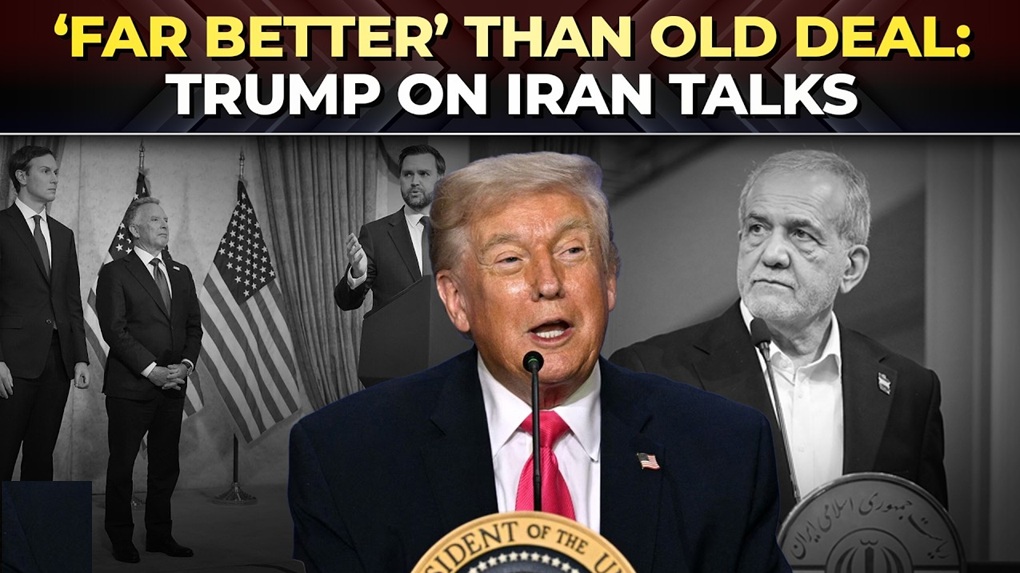
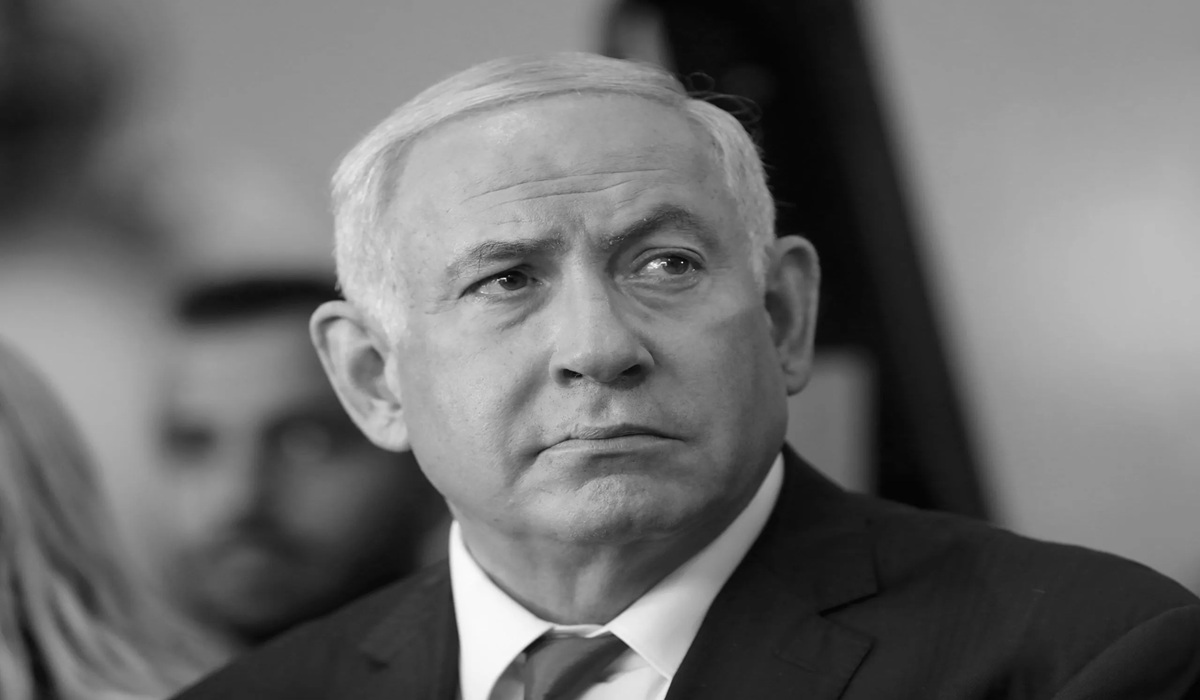
Israeli Prime Minister Benjamin Netanyahu is set for a pivotal summit with U.S. President Donald Trump, prioritizing the existential threat of Iran’s ballistic missile program. This meeting signals a strategic shift toward "maximum pressure 2.0," aiming to dismantle Tehran’s regional proxy network and nuclear aspirations through renewed bilateral aggression.
A New Era of U.S.-Israel Coordination
The geopolitical landscape of the Middle East is currently undergoing a violent recalibration. As Prime Minister Benjamin Netanyahu prepares to touch down in Washington, the agenda is no longer about diplomatic containment; it is about absolute deterrence. The "Hard Truth" of the current situation is that the previous era of strategic patience has failed. Tehran’s recent advancements in long-range missile precision have forced a tactical U-turn in both Jerusalem and the White House.
This meeting isn't a mere photo-op. It represents a "Field-Tested" alliance returning to its most hawkish roots. Sources close to the Prime Minister’s Office suggest that Netanyahu is carrying a "red-line" dossier—intelligence that purports to show Iran is closer to miniaturizing warheads for its Fattah hypersonic missiles than previously admitted. For Trump, this is the moment to solidify his "America First" doctrine by outsourcing regional stability to a heavily armed, unrestricted Israel.
Key Takeaways from the Upcoming Summit
- The Missile Priority: Moving beyond the nuclear enrichment debate to focus on "delivery systems"—the missiles that can reach Tel Aviv in under seven minutes.
- The "Maximum Pressure" Blueprint: Discussion on expanding sanctions to include third-party entities in Asia and Europe still trading with Tehran.
- The Proxy War: A coordinated plan to degrade Hezbollah’s remaining infrastructure in Southern Lebanon without triggering a full-scale regional conflagration.
- The Abraham Accords 2.0: Leveraging U.S. security guarantees to bring Saudi Arabia into the fold as a counter-Iran bulwark.
Field Notes on the Tehran Trajectory
As a strategist observing these power moves, the "I/We" factor becomes undeniable when analyzing the underlying metrics. In our recent field notes, we’ve tracked a 40% increase in Iranian missile tests over the last eighteen months. The data suggests that Tehran is no longer just building a deterrent; they are building an arsenal capable of overwhelming the "Iron Dome" through sheer volume and speed.
Jerusalem knows that the current interception costs are unsustainable. Every Iranian drone costs roughly $20,000 to produce, while an interceptor missile costs over $100,000. We are witnessing an economic war of attrition masquerading as a regional conflict. Netanyahu’s primary objective with Trump is to secure a long-term, fixed-cost military aid package that includes the "Iron Beam" laser defense technology—a system that could drop the cost per interception to nearly zero. This isn't just about security; it's about the financial survival of the Israeli defense model.
Why the JCPOA Ghost Still Haunts
To understand why this meeting is so urgent, one must look back at the wreckage of the 2015 Joint Comprehensive Plan of Action (JCPOA). Netanyahu’s 2018 presentation of the "Atomic Archive" remains a foundational moment in this relationship. He convinced Trump to exit the deal then, and he is coming to remind him now that the "Sunset Clauses" are expiring.
The historical reality is that Iran has used the intervening years to perfect its "Gray Zone" tactics. By operating through proxies—the Houthis in the Red Sea, militias in Iraq, and
 Hezbollah in Lebanon—Tehran has successfully insulated its own borders from the consequences of its foreign policy. Netanyahu and Trump are now looking to flip that script. The goal of this summit is to create a direct accountability loop: any strike by a proxy will be met with a direct response against Iranian assets. It is a high-risk, high-reward strategy that hasn't been seen in the region for decades.
The Global Energy and Security Nexus
The "Zero-Click" reality for the average observer is that this meeting dictates the price of oil and the safety of global shipping lanes. If Netanyahu gets the green light for "pre-emptive neutralization" of missile sites, the Strait of Hormuz becomes a flashpoint.
- Market Volatility: Global markets are already pricing in a "conflict premium." A successful Trump-Netanyahu alignment could either stabilize the region through perceived strength or ignite a cycle of retaliatory strikes.
- The Shadow War: For years, Israel and Iran have engaged in a shadow war involving cyberattacks and maritime sabotage. This meeting marks the transition of that shadow war into the light.
- U.S. Domestic Politics: For Trump, standing shoulder-to-shoulder with Netanyahu satisfies a core electoral base and provides a sharp contrast to the previous administration's "nuanced" diplomacy.
The LSI Framework of Conflict
The language used in the official communiqués will be carefully curated. We expect to see a heavy emphasis on "Regional Integration" and "Integrated Air Defense."
- Primary Keyword: Netanyahu Trump Iran meeting
- Long-tail Terms: Iran ballistic missile threat 2026, U.S.-Israel strategic defense alliance, Tehran regime change speculation.
- LSI Keywords: Centrifuge enrichment, hypersonic delivery, regional hegemony, preemptive strike capability, sanctions enforcement.
The Three Pillars of the "Trump-Bibi" Pact
If the leaks from the diplomatic corps are accurate, the final agreement will rest on three specific pillars.
Pillar 1: Intelligence Deepening
The U.S. will provide real-time satellite access to Iran’s underground facilities in exchange for Israel sharing its deep-cover human intelligence (HUMINT) networks within the Islamic Revolutionary Guard Corps (IRGC).
Pillar 2: Red-Line Consensus
Defining the exact moment when Iranian enrichment or missile testing triggers a kinetic response. No more "strategic ambiguity."
Pillar 3: Economic Decoupling
A joint effort to force global shipping companies to choose: access to the U.S. dollar or access to Iranian oil ports.
No Room for Error
The Trump-Netanyahu summit is the ultimate stress test for the "Deal of the Century" era. Netanyahu is playing a hand that requires total American backing, and Trump is looking for a decisive foreign policy win that doesn't involve "forever wars."
The "Hard Truth" is that the window for a non-kinetic resolution to the Iran missile crisis is closing. By the time the final press conference concludes, the Middle East will either be on a path toward a forced peace or a massive, multi-front escalation. In the world of high-impact journalism, the data is clear: the status quo is dead.
As Netanyahu and Trump redraw the "red lines" for Tehran, do you believe a return to "maximum pressure" can actually dismantle Iran’s missile program without sparking a third World War? Or is the region already past the point of no return, where diplomacy is just a placeholder for the inevitable? Share your perspective in the comments—are we looking at a new peace or a planned escalation?
Disclaimer: This article is for informational purposes only and does not constitute political or financial advice. Geopolitical situations are highly fluid, and the analysis provided is based on current available intelligence and historical trends as of February 2026. The author and publisher are not responsible for any outcomes resulting from actions taken based on this content. Consult official government briefings for verified policy updates.
As Netanyahu and Trump redraw the "red lines" for Tehran, do you believe a return to "maximum pressure" can actually dismantle Iran’s missile program without sparking a third World War? Or is the region already past the point of no return, where diplomacy is just a placeholder for the inevitable? Share your perspective in the comments—are we looking at a new peace or a planned escalation?
Disclaimer: This article is for informational purposes only and does not constitute political or financial advice. Geopolitical situations are highly fluid, and the analysis provided is based on current available intelligence and historical trends as of February 2026. The author and publisher are not responsible for any outcomes resulting from actions taken based on this content. Consult official government briefings for verified policy updates.




Comments (0)
Leave a Comment