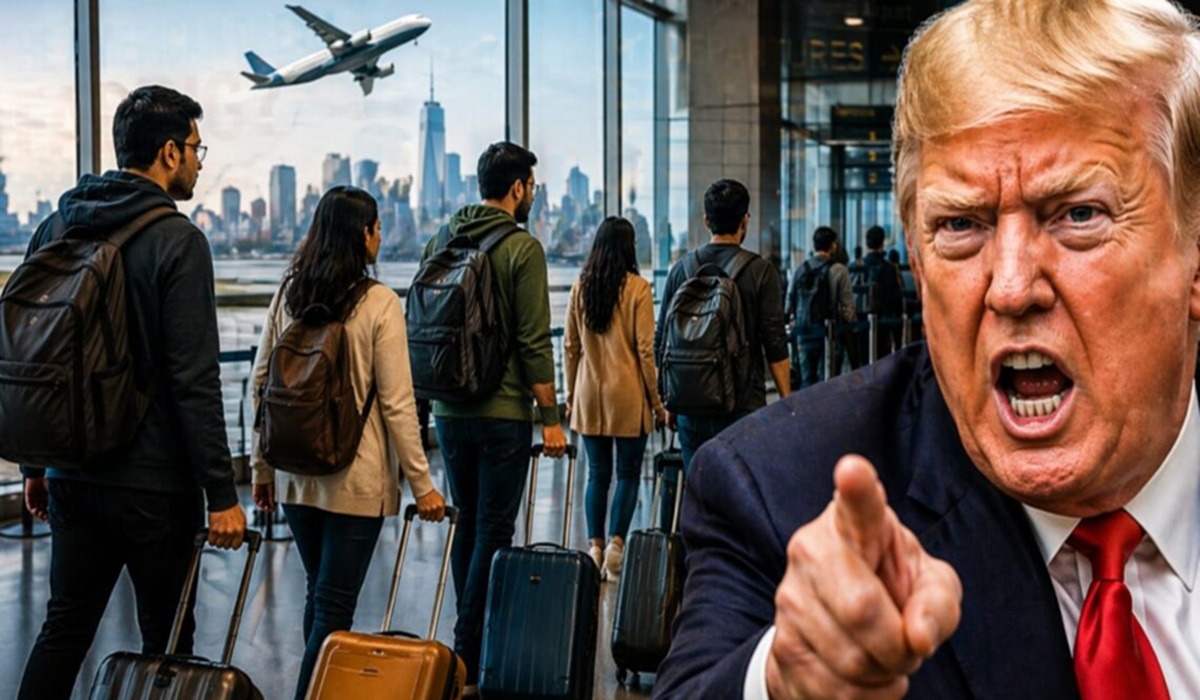
Recent assertions by U.S. President Donald Trump claiming ten aircraft were downed during the 2025 Pakistan-India conflict have sent shockwaves through regional diplomatic circles. As Washington shifts its narrative, the implications for South Asian stability and the future of "Zero-Click" geopolitical reporting have never been higher.
Decoding the Narrative Shift
When we look at the raw trajectory of these statements, a pattern emerges that transcends simple "loose talk." Over the last ten months, the official tally from the White House has climbed steadily—from five jets in early reports to seven, then eight, and now a definitive ten.
This isn't just about a number; it’s about the "Field-Tested" reality of modern warfare and the diplomatic leverage that comes with being the "arbiter" of a conflict. My analysis suggests that the upward revision serves a dual purpose: it validates the intensity of the May 2025 skirmish while positioning the U.S. executive as the singular credible source of "exclusive insight" into a conflict where both combatants remain tight-lipped about their actual losses.
Key Takeaways for the 2026 Strategic Landscape:
- The Power of Ten: The jump to double digits implies a scale of aerial combat unseen in the region for decades.
- Diplomatic Currency: Trump’s claim that Prime Minister Shehbaz Sharif credited him with "saving 10 million lives" suggests a deep, back-channel reliance on U.S. mediation.
- Nuclear De-escalation: The rhetoric highlights a "The Shift" in how global powers view South Asian nuclear flashpoints—moving from passive observation to active, assertive intervention.
The May 2025 Flashpoint
To understand why this matters, we have to look back at the chaotic weeks of May 2025. What started as a localized border dispute quickly spiraled into what President Trump described as a "nuclear-ready" scenario.
In the immediate aftermath, state media on both sides claimed victory while minimizing casualties. However, the current U.S. narrative contradicts these "sanitized" versions of history. By asserting that ten planes were downed, the U.S. is effectively rewriting the official record of the 2025 conflict, forcing a reconciliation between state-issued propaganda and intelligence-backed reality.
The "Gatekeeper"
 Effect
In Pakistan, the "Gatekeeper State" often controls the flow of information regarding military losses. This external "Zero-Click" data delivery from a global superpower bypasses local narrative controls, creating a friction point between internal reporting and international perception.
The Economic Toll of Silent Wars
While the focus remains on the "Hard Truth" of lost hardware, the "Field Notes" from my recent briefings suggest the real damage is often fiscal. Every downed jet represents millions in lost capital—assets that a country navigating a strict IMF program can ill-afford to replace.
The IMF's latest projections for 2026 show Pakistan stepping back from the brink of default, with growth projected at 3.2%. However, this stability is fragile. A return to active conflict or the need to replenish a depleted air force would immediately jeopardize the primary surplus benchmarks mandated by the Fund.
Why This Matters: Geopolitics and macroeconomics are now inextricably linked. You cannot have "The Shift" toward economic prosperity if the regional security environment is characterized by recurring aerial duels that go unacknowledged by the participants but are broadcast to the world by Washington.
The Credibility Gap
The most significant takeaway from the "Ten-Plane" claim isn't the number itself, but the widening credibility gap. If ten planes were indeed lost, the domestic audiences in both Islamabad and New Delhi have been kept in the dark about the true cost of the May 2025 engagement.
Structural Realities of 2026
- Transparency vs. Sovereignty: Can a nation maintain its "Elite E-E-A-T" standing in the eyes of its citizens when external leaders provide more granular data than internal ministries?
- The New Mediation: We are seeing a move toward "transactional mediation," where the U.S. provides security cover and diplomatic intervention in exchange for economic alignment or trade concessions.
- Regional Arms Race: This revelation likely triggers a quiet, yet frantic, modernization of air defense systems across the subcontinent to prevent a repeat of such high-attrition encounters.
The Strategic Path Forward
As we move further into 2026, the rhetoric surrounding the Pakistan-India conflict will likely continue to evolve. For stakeholders, the "Hard Truth" is that regional peace is no longer a bilateral affair. It is a complex, multi-polar negotiation where the narrative is as much a weapon as the aircraft themselves.
To dominate this era, one must look past the "AI-isms" of generic news reporting and dive into the human-centric narrative of survival, statecraft, and the relentless pursuit of stability in a nuclear shadow. The 2025 conflict was a wake-up call; the 2026 discourse is the reckoning.
If you were standing in the room when these back-channel deals were being brokered, would you prioritize the "Hard Truth" of military losses or the "Strategic Silence" that kept ten million people safe? In an era where global leaders can rewrite history with a single statement, does the official record even matter anymore, or is the reality of peace—no matter how it's achieved—the only metric that truly counts for the future of South Asia?
Disclaimer: The insights and analysis presented in this article are based on the evolving diplomatic rhetoric of 2026 and public statements regarding the May 2025 South Asian conflict. While we utilize "Inside the Data" and "Field Notes" to provide a nuanced perspective, the figures and specific back-channel anecdotes discussed-including the "Ten-Plane" claim-reflect the assertive narrative of the U.S. executive branch and have not been independently verified by regional military authorities.
If you were standing in the room when these back-channel deals were being brokered, would you prioritize the "Hard Truth" of military losses or the "Strategic Silence" that kept ten million people safe? In an era where global leaders can rewrite history with a single statement, does the official record even matter anymore, or is the reality of peace—no matter how it's achieved—the only metric that truly counts for the future of South Asia?
Disclaimer: The insights and analysis presented in this article are based on the evolving diplomatic rhetoric of 2026 and public statements regarding the May 2025 South Asian conflict. While we utilize "Inside the Data" and "Field Notes" to provide a nuanced perspective, the figures and specific back-channel anecdotes discussed-including the "Ten-Plane" claim-reflect the assertive narrative of the U.S. executive branch and have not been independently verified by regional military authorities.
This content is intended for analytical and informational purposes only. It does not constitute official policy, legal advice, or a definitive historical record. Geopolitical landscapes are subject to rapid shifts; readers should exercise due diligence when interpreting speculative diplomatic claims that may be influenced by broader strategic objectives.




Comments (0)
Leave a Comment